
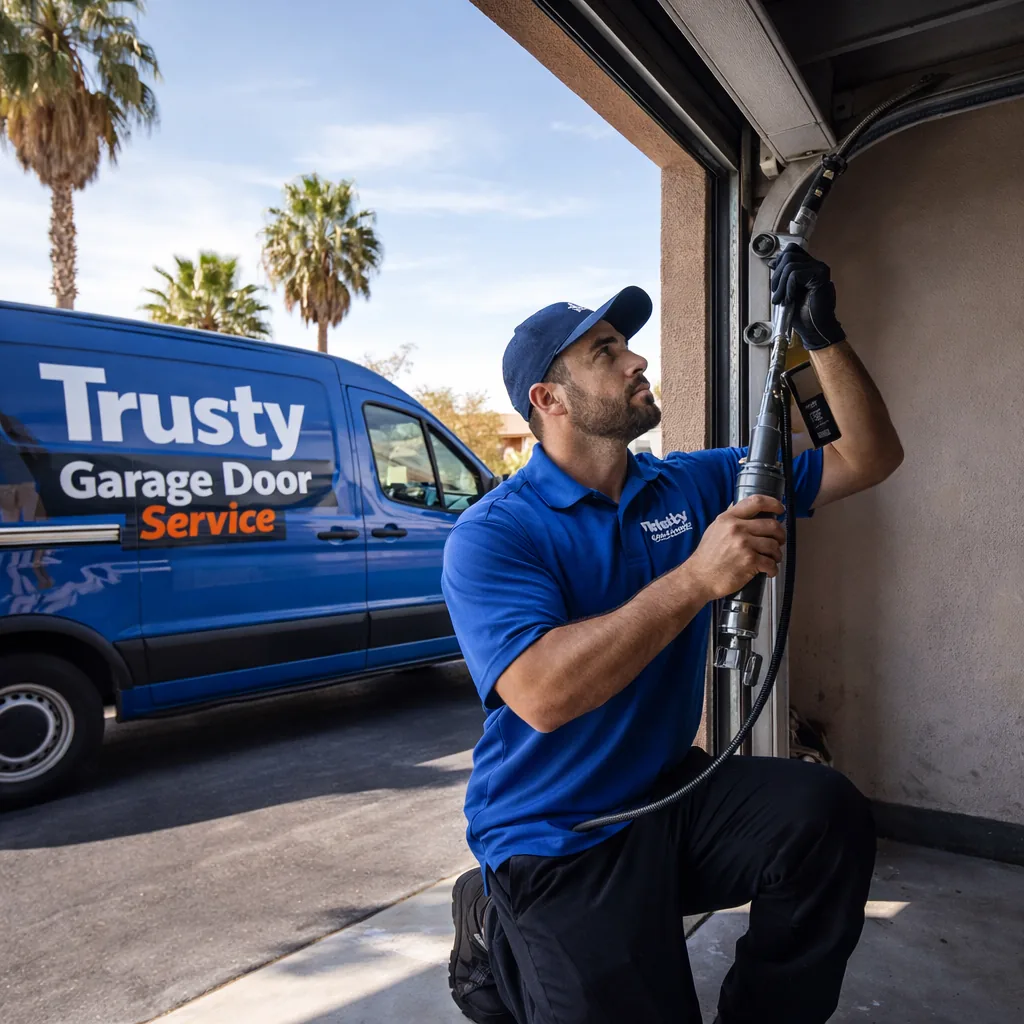
Same-Day Service · 24/7 Emergency · Las Vegas
Garage Door Maintenance & Tune-Up
A yearly tune-up catches the worn roller or loose hardware before it becomes a broken spring or a stuck door, and it takes less than an hour for most homes across the Las Vegas valley.
Call (725) 216-7158 to ScheduleWhy Maintenance Matters More in the Las Vegas Heat
A garage door goes through more daily stress here than in most climates. Summer afternoons regularly top 110°F, and the metal track, springs, and hardware expand and contract with that heat every single day, which loosens bolts and dries out lubricant faster than in a milder climate. Add in the dust that spring windstorms carry into the tracks and rollers, and a door that goes untouched for a couple of years usually shows it: grinding rollers, a door that no longer sits level, or a spring carrying more strain than it should.
Left unchecked, that wear does not stay minor. A roller that has been grinding for months puts extra load on the track and the opener motor. Most of the garage door opener repair calls we run start as a maintenance issue nobody caught in time.
An out-of-balance door also strains a spring that would otherwise last years longer, and a spring that finally gives out after that kind of extra strain often means a full garage door replacement rather than a simple lubrication and adjustment.
Regular maintenance protects whatever you already have installed, whether that is original equipment or the result of recent garage door repair in Las Vegas work, and it costs far less than either of those bigger jobs.
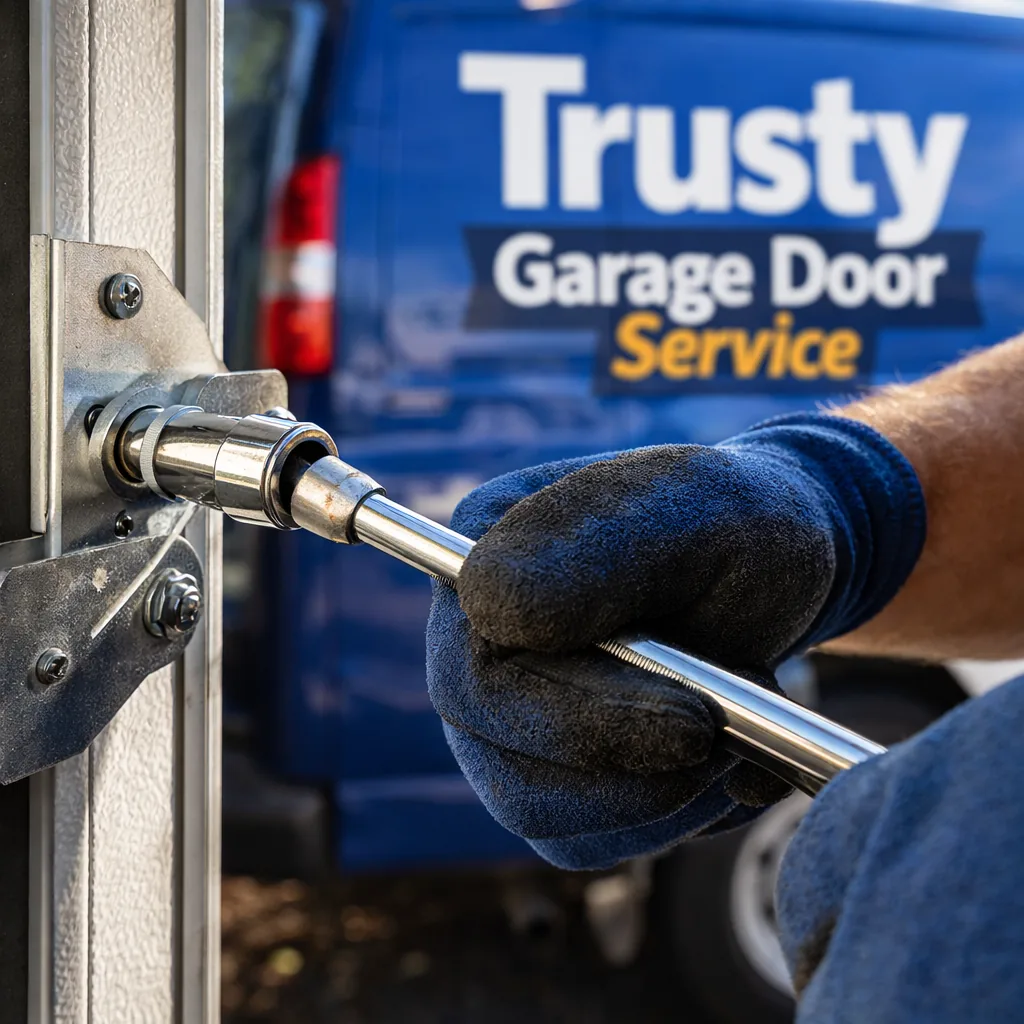
What's Included in a Tune-Up Visit
We check the door as a full system, not just the parts that squeak. That means testing spring balance by disconnecting the opener and moving the door by hand, inspecting rollers and hinges for wear, and confirming the track is aligned rather than just clean. We also test the safety reversal feature and photo-eye sensors, since a sensor that has drifted out of alignment is one of the more common reasons a door refuses to close months down the road.
Hardware gets attention too. Every bracket, hinge, and bolt on the door loosens slightly over years of heat cycling and daily use, and a quick torque check catches that before it turns into a rattling door or a track that pulls away from the wall. We finish by lubricating the rollers, hinges, and springs with the right lubricant for each part, since the wrong product can attract more dust than it prevents in a desert climate.
How Often Your Door Needs Attention
Most homes across the valley do fine with one tune-up a year. Homes at the edge of the valley near undeveloped desert lots, including parts of Summerlin and Mountain's Edge, tend to see more windblown dust in the tracks and benefit from a check every six months instead. Older chain-drive openers, common in homes built through the 1990s, also wear faster than newer belt-drive systems and are worth a slightly closer look each visit.
If your door is coming up on ten years without a professional check, it is worth scheduling one even if nothing seems obviously wrong yet, since a spring nearing the end of its cycle life rarely gives warning before it lets go. If a tune-up turns up something a lubrication and adjustment cannot fix, we will walk you through whether garage door installation of a new unit makes more sense than patching an old one.
Signs Your Door Is Due for a Tune-Up
Grinding or Squeaking
Dry rollers and hinges are usually the cause, and left alone they wear the track faster than a simple lubrication would have prevented.
Uneven Closing
A door that looks crooked while moving often points to an out-of-balance spring or a track pulling loose from its bracket.
Slower Response
An opener that hesitates before moving can mean the motor is compensating for a door that is harder to lift than it should be.
Visible Dust in the Track
Grit in the roller channel accelerates wear and is worth clearing out well before it causes a rougher, noisier cycle.
What Happens During a Tune-Up
- 1
Full system check
We test spring balance, track alignment, and opener force and travel settings before touching anything.
- 2
Hardware inspection
Every hinge, roller, and bracket gets checked for wear and every bolt gets torqued to spec.
- 3
Safety test
We confirm the auto-reverse feature and photo-eye sensors respond correctly, since these matter for anyone using the garage.
- 4
Lubrication
Rollers, hinges, and springs get the correct lubricant for the part, applied in an amount that will not attract extra dust.
- 5
Honest report
If something needs more than a tune-up, you hear about it plainly, with no pressure to book more work than the door actually needs.
Our door had been grinding for months and we kept putting it off. The tune-up took about forty minutes and it's been quiet since.Carol B.
They caught a spring that was close to going during a routine check, so we got it replaced before it snapped on us.Frank D.
Catch the Small Problem Before It Becomes a Big One
Schedule a tune-up in less time than it takes to notice the door has started grinding.
Call (725) 216-7158Garage Door Maintenance Questions
How often should a garage door get a professional tune-up?
Once a year covers most homes in the Las Vegas valley. Homes near undeveloped desert lots that see more windblown dust, or those still running an original opener from the 1990s, tend to do better on a six-month schedule.
What's the average lifespan of a garage door opener?
Most openers last 10 to 15 years with regular use, though units in hot, uninsulated garages tend to fall toward the shorter end of that range. Routine maintenance, particularly keeping the drive gear lubricated and the door properly balanced, is one of the more reliable ways to get the full lifespan out of a unit.
Can I do garage door maintenance myself?
Lubricating hinges and visually checking for obvious wear is fine to do yourself. Testing spring balance and adjusting opener force settings involves parts under real tension, and we recommend leaving that part to a licensed technician who does it regularly.
Does regular maintenance actually prevent a broken spring?
It extends a spring's working life by keeping the door properly balanced, since a door that is out of balance puts extra strain on the spring every time it cycles. It cannot prevent a spring from eventually reaching the end of its rated cycle count, but a tune-up usually catches a spring that is close to failing before it lets go without warning.